You’ve got two goals on your to-do list: Exercise more and eat
healthy.
You’re crushing the exercise goal and it wasn’t as hard as you
thought it would be. Your “eat healthy” goal, however, has been more of a
challenge.
But you’re making it work: cooking more at home, packing lunch for
work, and cutting sugar out of your coffee. Despite all of that, your
fat loss has all but sputtered out. Have you hit the dreaded “
plateau“?
Good news: Probably not. Bad news: You
think you’re eating better, but you’re probably not.
Find out if you’re making these four common food mistakes and how to get on track.

1. Not Watching Your Portions
Avocados are good for you — but not when you put
an entire avocado on your toast.
Eating clean doesn’t mean you have free reign to eat as much as you want; there actually is such a thing as “too much of a good thing.”
Example:
Hummus
can be a delicious, healthy food, but a serving size is two tablespoons
— not half the container you normally enjoy with your baby carrots. Be
mindful of
how much you’re eating: Use a food scale, measuring spoons, or
portion-control containers to make sure you aren’t overdoing it.

2. Not Watching Your Sugar
By now, we all know that
too much sugar in your diet is not a good thing. The American Heart Association advises
no more than six teaspoons of sugar per day for women and no more than nine for men.
The problem is that even if you’re cutting sugar from your coffee and
kicking your candy habit, you’re only addressing the obvious sources.
Sugar (added sugar, not naturally occurring sugar in fruits and
vegetables) is in pretty much everything we eat, even foods you wouldn’t
think contain sugar — bread, sports drinks, salad dressings, granola
bars, yogurt, and pasta sauces all contain added sugars.
Sugar also goes by
many different names, so it can be hard to spot on a food label. Look for words that end in
-ose and ingredients like cane juice, turbinado, dextrin, and malt syrup.
You can still eat sugar as the occasional treat — in moderation.
There are times when a little added sugar may benefit you, particularly
in a well-designed supplement, such as the way it replenishes glycogen
in various
Beachbody Performance products.
3. Drinking Your Fruits and Vegetables
Juicing is an easy way to get your daily fruits and vegetables, but
that green juice may not be as healthy as you think it is. Most juicers
remove the pulp (or fiber) from the fruit. But the fiber in fruits and
vegetables is just as important as the vitamins and minerals in the
juice:
Fiber
helps you feel more full and slows down the digestion of the fruit and
vegetable sugars, so you don’t get that blood sugar spike.
Juices also lack fat, and fat can help your body absorb key
vitamins like A, D, E, and K more easily. A
smoothie with protein, fiber, and fat is a more balanced option.
4. Ordering a Salad
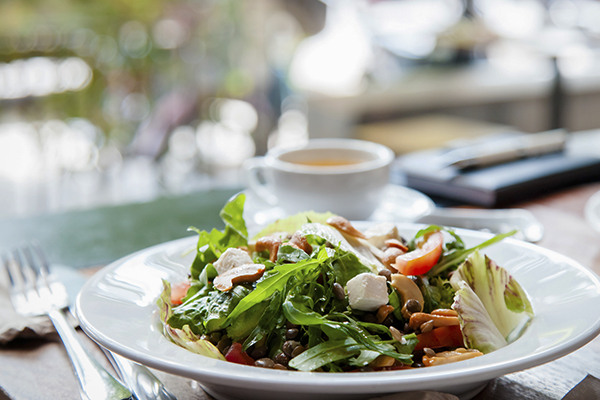
All salads are healthy, right? Nope. Don’t assume that a salad is
automatically the healthiest or lowest calorie choice when you eat out.
Example: A chicken avocado salad at a popular restaurant chain weighs in
at a whopping
1,870 calories. And McDonald’s kale salad? It’s loaded with
more calories and sodium than a Double Big Mac.
The culprit is usually the dressing, but the high-calorie count can
often be tied to serving size (see #1) and additional toppings like
cheese, nuts, and candied fruit. Don’t be afraid to ask for the extras
on the side; that way, you control what to add to your salad. Chain
restaurants are required to provide calorie and nutrition information,
so read the fine print before your order. Better yet, check the menu
online before you go and decide what you want before you get there.
Eating better doesn’t have to be hard — the key is to be mindful of
what and how much you’re eating and you’ll be well on your way to
crushing that “eat healthy” goal.


